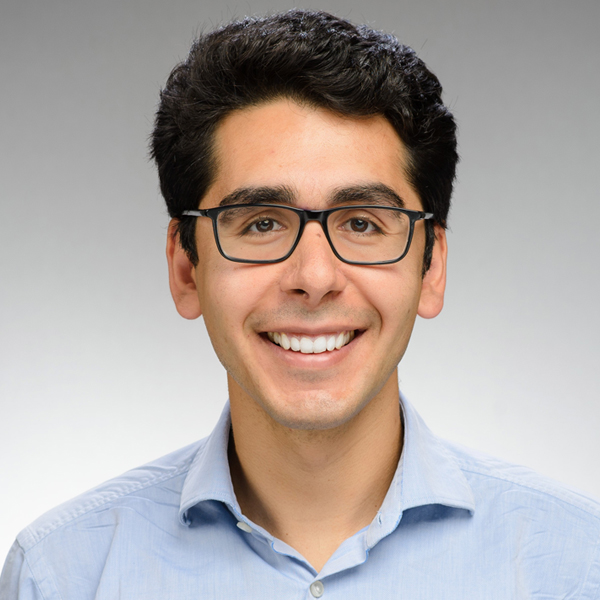
I am an assistant professor at the Department of Computer Science and Engineering and the Mendoza College of Business (courtesy) at the University of Notre Dame. My research examines how digital technologies shape teamwork, collaboration, and collective intelligence.
I direct the Research in Networks and Groups (RINGZ) laboratory. Our goal is to design and study systems that help people form teams, collaborate with AI, coordinate in extended reality, and make sense of complex social and organizational data. My work sits at the intersection of Human-Computer Interaction (HCI), Computer-Supported Cooperative Work (CSCW), Network Science, Human-AI Interaction, and Computational Social Science.
My research has been supported by the Alfred P. Sloan Foundation, Air Force Office of Scientific Research, DARPA, National Science Foundation, Microsoft Research, IBM, Amazon Research, and Slack Inc.
Publications | Students and Mentees | Teaching | CV | Email
Department of Computer Science and Engineering, University of Notre Dame.
353 Fitzpatrick Hall
Notre Dame, IN 46556
Email: dgomezara[at]nd.edu
Research Areas
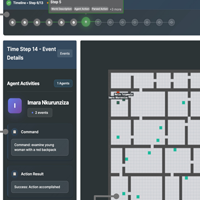
| Human-AI Teaming and Simulation I study how humans and AI systems can work together as teammates, collaborators, and experimental agents. My recent projects examine AI-generated team feedback, human-AI team simulations, human digital twins, and virtual confederates for behavioral experiments. |
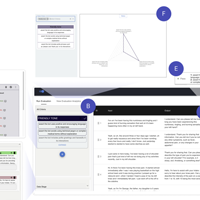
| LLM Evaluation and Collaborative Alignment I build tools that help multiple stakeholders define, negotiate, and refine evaluation criteria for large language models. This work focuses on LLM-as-a-judge workflows, collaborative alignment, transparent criteria authoring, and evaluation practices for generative AI systems. |
| Team Formation and Algorithmic Collaboration I investigate how recommender systems, social networks, and algorithmic decision-making shape team formation, dynamics, and performance. This line of work includes studies of self-assembled teams, algorithmic team assignment, and systems for assembling diverse and connected teams. |
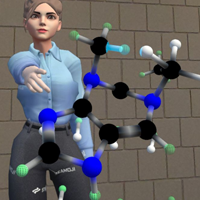
| Extended Reality for Collaboration I examine how virtual, augmented, and mixed reality environments change how people collaborate, brainstorm, learn, and feel included in teams. This work explores embodied interaction, spatial collaboration, familiarity bias, and the future of scientific and organizational work in immersive environments. |
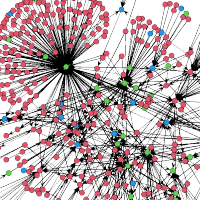
| Computational Social Science and Networked Mobilization I use network science, natural language processing, and computational methods to study collective action, media systems, democratic participation, and scientific collaboration. Recent projects examine Chilean mobilization, constitutional referendums, multilayer agenda-setting, and diffusion in social networks. |
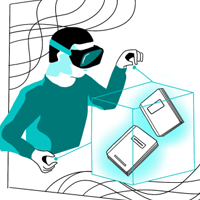
| Future of Work and Remote Collaboration I study how collaboration platforms, remote work, and organizational technologies affect teamwork at scale. This work examines collaboration skills, distributed coordination, team processes, and the conditions that make digital collaboration more effective. |
News
-
AFOSR Young Investigator Program award
Read more: AFOSR Young Investigator Program awardI received a 2026 AFOSR Young Investigator Program award.
-
Two CSCW 2026 Honorable Mention Awards
Read more: Two CSCW 2026 Honorable Mention AwardsTwo of our CSCW 2026 papers received Honorable Mention Awards.
-
CoBranchMR accepted to CSCW 2026
Read more: CoBranchMR accepted to CSCW 2026CoBranchMR was accepted as a demonstration paper at CSCW 2026.
Selected Publications
Chiang, C., Gebreegziabher, S., Szymanski, A., Yang, Y., Do, H., Ashktorab, Z., Geyer, W., Li, T., & Gómez-Zará, D. (2026). MultEval: Supporting Collaborative Alignment for LLM-as-a-Judge Evaluation Criteria. CHIWORK 2026.
Sayadi, N., Co, S., & Gómez-Zará, D. (2026). “Feeling that I was Collaborating with Them:” A 20-year Scoping Review of Social Virtual Reality Leveraging Collaboration. Proceedings of the ACM on Human-Computer Interaction.
Gómez-Zará, D., Kam, V., Chiang, C., Xia, K., Voraprukpisut, P., DeChurch, L., & Contractor, N. (2026). Shaping Collaborations with Algorithms: How Agency and Diversity Criteria Influence Team Formation and Outcomes. Proceedings of the ACM on Human-Computer Interaction.
Almutairi, M., Chiang, C., Bai, Y., & Gómez-Zará, D. (2025). tAIfa: Enhancing Team Effectiveness and Cohesion with AI-Generated Automated Feedback. CHIWORK 2025.
Fernandez-Espinosa, M., Clouse, K., Sellars, D., Tong, D., Bsales, M., Alcindor, S., Hubbard, T., Villano, M., & Gómez-Zará, D. (2025). Breaking the Familiarity Bias: Employing Virtual Reality Environments to Enhance Team Formation and Inclusion. CHI 2025.
Gómez-Zará, D., Schiffer, P., & Wang, D. (2023). The promise and pitfalls of the metaverse for science. Nature Human Behaviour.
For Prospective Students
I advise students interested in HCI, CSCW, human-AI interaction, extended reality, network science, and computational social science. Students in my group often build interactive systems, run behavioral experiments, analyze collaboration data, and develop computational models of teams and organizations.
If you are interested in working with me, please read my recent publications and send a short email describing your research interests, relevant experience, and why you think our interests overlap.